The Art of Touch: Best Control Paddles for 2024
If you've spent any time on the pickleball court recently, you've probably noticed a shift. Everyone is obsessed with power. It’s all about who can hit the hardest drive or the fastest serve. But let me tell you something from my years on the pro tour: power wins points, but control wins championships.
When you're at the kitchen line, facing a barrage of speed-ups, you don't need a sledgehammer; you need a scalpel. You need a paddle that acts like a reset button, absorbing the pace and dropping the ball softly into the kitchen. That's the essence of the "soft game," and it's where matches are truly decided. Today, we're diving deep into the paddles that excel at this—the ones that make the court feel smaller and your placement feel effortless.
What to Look For in Control Paddles
Before we get into the specific rankings, let's break down the engineering behind a "control" paddle. It’s not just marketing fluff; there are tangible physics at play here.
Core Thickness is King Generally speaking, a thicker core means more control. Most standard paddles are around 13mm or 14mm. When you step up to a 16mm or even 20mm core, you're adding more polymer material between the faces. This absorbs more energy from the ball impact, effectively slowing it down. Think of it like catching a baseball in a thick catcher's mitt versus a thin infielder's glove. The ball "dwells" on the face longer, giving you that split-second more to direct it.
Face Material: The Friction Factor You'll hear a lot about "Raw Carbon Fiber" or "T700 Carbon." What this really means is that the surface has a gritty texture that isn't just painted on—it's part of the material. This grit grabs the ball, allowing you to impart spin. Spin is control's best friend. Topspin keeps your drives in the court, and backspin keeps your dinks low and unattackable.
Shape and Sweet Spot For pure control, a wider paddle face (standard or wide-body) usually offers a larger sweet spot than an elongated one. However, modern elongated paddles are getting better at expanding that sweet spot. A larger sweet spot means that even if you miss-hit slightly, the ball still goes where you intend, rather than dying into the net.
Our Testing Methodology
I don't just look at spec sheets. For this review, I took these paddles out to the courts for two weeks of drilling and match play. My testing focused on three specific shots: 1. The Third Shot Drop: How easy is it to transition from the baseline to the kitchen without popping the ball up? 2. The Reset: When my opponent blasts a ball at my chest, does the paddle absorb the shock, or does it trampoline off? 3. The Dinking Rally: Can I consistently place the ball in the corners without unforced errors?
Top Control Paddles Ranked
Here is a quick look at the top contenders we analyzed.
| Product | Weight | Core Thickness | Face Material | Best For |
|---|---|---|---|---|
| Selkirk LUXX Control | Light/Mid | 20mm | Florek Carbon Fiber | Overall Control |
| Selkirk SLK Halo | 8.0 oz | 16mm | Raw Carbon Fiber | Best Value |
| JOOLA Perseus | 8.0 oz | 16mm | Charged Carbon | Pro Precision |
Best Overall: Selkirk LUXX Control Pickleball Paddle - Black Invikta
Watch: Selkirk Sport LUXX Control Pickleball Paddle - Black Invikta
If you are looking for the absolute pinnacle of plush feel, the Selkirk LUXX Control Invikta is in a league of its own. Selkirk took a massive swing here by introducing a 20mm core—significantly thicker than the industry standard 16mm.
The result is a paddle that feels incredibly soft. When I first hit with it, it was almost jarring how quiet and dampened the impact felt. It completely neutralizes the pace of incoming drives. If you struggle with popping up your resets, this paddle practically does the work for you. The "Florek Carbon Fiber" face provides ample grit for shaping shots, though it's not the grittiest on the market compared to some raw carbon options.
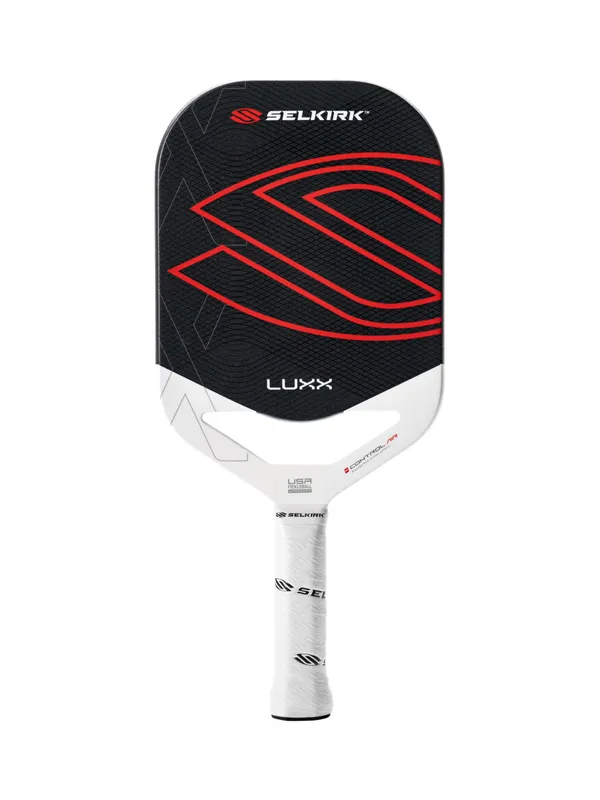
The "Air Dynamic Throat" is another feature I appreciate. Despite the thick core, the paddle doesn't feel like a brick. It moves through the air surprisingly fast, which is crucial for those rapid-fire hand battles at the net. It's an investment, certainly, but for players who prioritize touch above all else, it's hard to beat.
Best Value: Selkirk SLK Halo Control Pickleball Paddle
Watch: Selkirk SLK Halo Control Pickleball Paddle | Green 2025 | Max
For a long time, getting a high-quality raw carbon fiber paddle meant spending over $200. The Selkirk SLK Halo changed that narrative. This paddle brings premium materials to a much more accessible price point.
The standout feature here is the T700 Raw Carbon Fiber face. It is gritty, durable, and spins the ball beautifully. In my testing, I found I could carve my dinks with aggressive cut, keeping the ball bouncing low and awkwardly for my opponents. The 16mm core option (which I highly recommend over the 13mm for control players) offers a solid, stable feel without being too mushy.
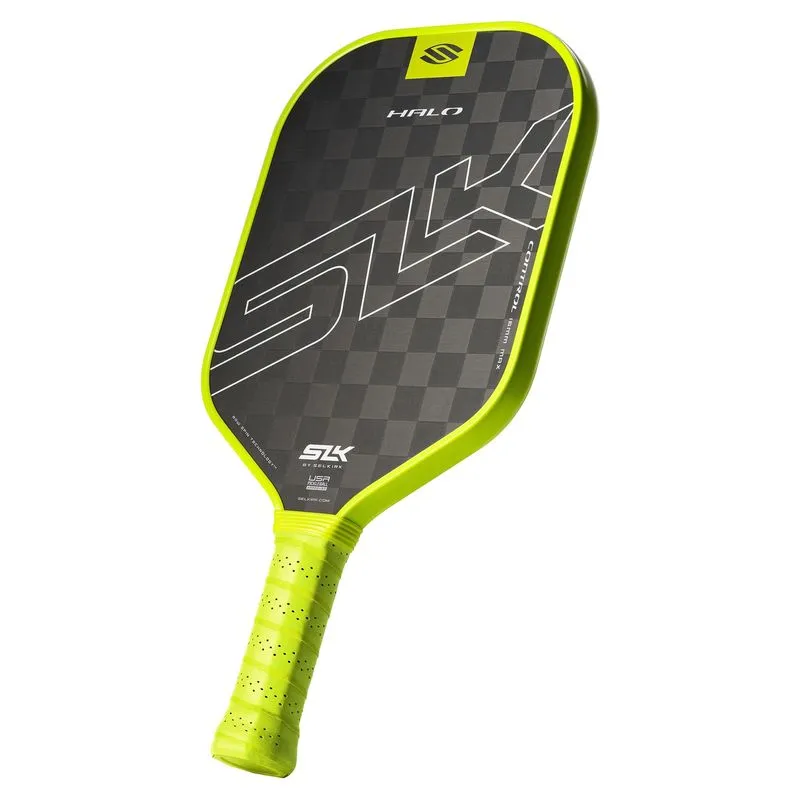
It doesn't have the fancy aerodynamic throat or the 20mm thickness of the LUXX, but it delivers 90% of the performance for a fraction of the cost. It’s a workhorse paddle that fits a wide range of playing styles.
Best for Pros: JOOLA Perseus Pickleball Paddle 16mm
Watch: JOOLA Perseus Pickleball Paddle 16mm
This is the paddle you see in the hands of the world's number one player, Ben Johns. The JOOLA Perseus is designed for precision, but it has a different "flavor" of control than the Selkirk LUXX.
Where the LUXX is soft and pillowy, the Perseus is crisp and responsive. JOOLA uses a "Charged Carbon Surface" which feels slightly stiffer. This is ideal for advanced players who want control but don't want to sacrifice too much pop on their put-away shots. The feedback is instant—you know exactly where the ball is on the face at all times.
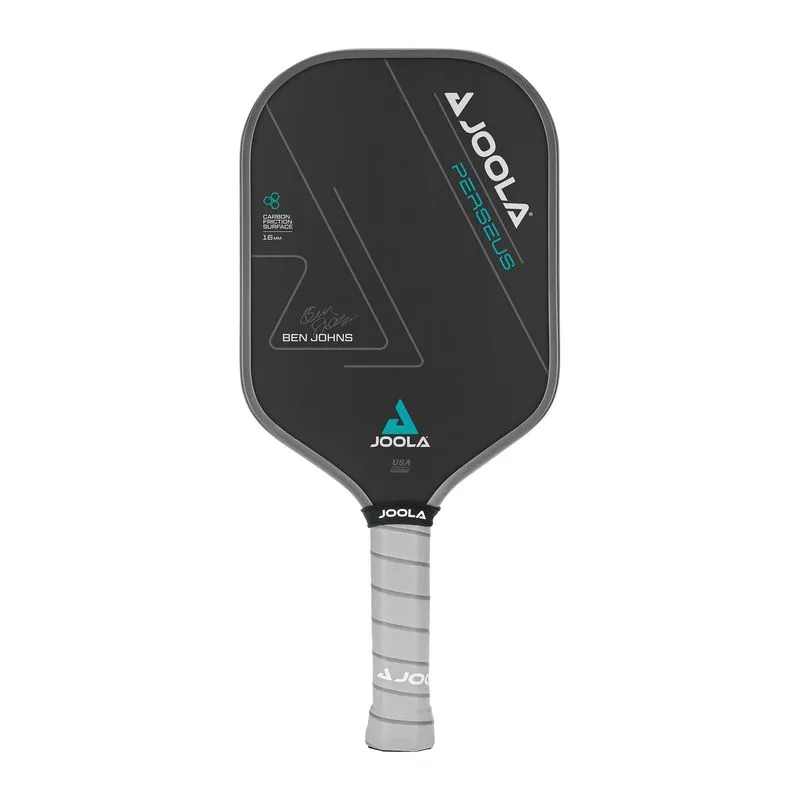
The 16mm core provides excellent stability. Even on off-center hits, the paddle doesn't twist in your hand, thanks to the thermoformed construction (where the edge guard is bonded to the core). It allows for surgical precision. If you have the mechanics to generate your own power and just need a paddle that puts the ball on a dime, this is it.
Our Top Pick

Selkirk Sport
Selkirk Sport LUXX Control Pickleball Paddle - Black Invikta
After extensive testing, the Selkirk LUXX Control takes the crown for pure touch. Its 20mm core changes the geometry of resets, making it nearly impossible to pop up the ball. While the Perseus offers more pop for pros, the LUXX is the ultimate tool for mastering the soft game.
Beginner vs. Pro: What's the Difference?
When choosing a control paddle, your skill level dictates what you actually need.
For Beginners: You want forgiveness. A paddle with a massive sweet spot and a very soft feel (like the Selkirk SLK Helix Pro or the LUXX) is ideal because it masks mistakes. If you hit the ball near the edge, it will still go over the net. You don't need excessive spin capability yet; you just need consistency.
For Pros: You want feedback and stability. Pros, or advanced players, hit the sweet spot 95% of the time. They don't need as much help keeping the ball in play. Instead, they need a paddle that tells them exactly how hard they hit the ball so they can dial in their distance control to the inch. They also need a surface that generates massive RPMs (rotations per minute) to dip the ball at the feet of their opponents.
Buying Guide and Final Recommendations
If you're ready to buy, keep these final tips in mind:
- Handle Length Matters: If you hit a two-handed backhand, look for a handle length of at least 5.25 inches. The JOOLA Perseus and Selkirk Invikta shapes are great for this. If you put your finger on the back of the paddle (ping pong style), a shorter handle with a wider face might feel more natural.
- Don't Fear the Weight: A slightly heavier paddle (8.0 oz+) is often better for control. Mass equals stability. If a paddle is too light, it will flutter when you block a hard shot.
- Grip Circumference: Ensure the grip isn't too big. A smaller grip allows for more wrist action, which is essential for adding spin and "softening" your hands.
Control isn't about being passive; it's about being precise. Whether you go for the high-tech plushness of the LUXX, the raw value of the Halo, or the surgical crispness of the Perseus, upgrading to a control-focused paddle is the fastest way to reduce your unforced errors and frustrate your opponents.
Frequently Asked Questions
Does a thicker core reduce power? expand_more
Yes, generally. A 16mm or 20mm core absorbs more energy, meaning the ball comes off the face slower than it would off a 13mm core. However, this allows you to swing fuller and harder with confidence that the ball won't fly long.
Can I still hit power shots with a control paddle? expand_more
Absolutely. Power comes primarily from your body mechanics (legs and core rotation), not just the paddle. A control paddle simply gives you a larger margin for error. You can still rip a drive; you just might need to swing slightly faster to get the same speed as a power paddle.
How long does the grit last on these paddles? expand_more
Carbon fiber faces are durable, but the grit does wear down over time. consistently. For a recreational player playing 2-3 times a week, you can expect peak spin performance to last about 6-9 months before it starts to smooth out slightly. Cleaning your paddle with a rubber eraser bar helps maintain the grit.